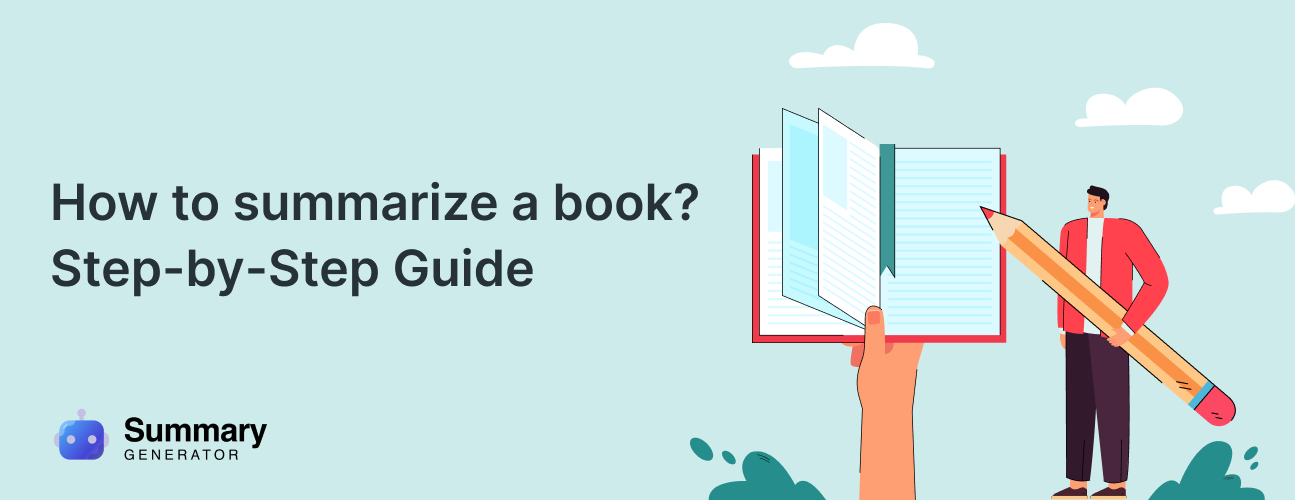

Book summarization converts lengthy texts into shorter documents containing the main information. Academic assignments and professional reports often require summary formats rather than complete text analysis. Students need condensed versions of study materials. Business professionals use summaries for meeting preparation and project documentation.
The summarization process follows specific steps, including reading, note-taking, content selection, and document composition. These procedures ensure accurate information transfer from source material to summary format.
This guide explains book summarization methods through systematic procedures. Each step includes technical instructions for content processing and document creation. So, let’s begin!
Understanding Book Summary:
Book summary creation involves extracting primary content from written materials and presenting information in a reduced format. This method works for fiction and non-fiction texts in academic and professional contexts.
Standard summaries contain 300-500 words covering primary topics, main characters, and central conclusions. The process focuses on information selection and organisation while preserving source accuracy.
Fiction summaries include themes, character functions, and story structure. Non-fiction summaries contain main arguments, evidence, and author’s conclusions.
Pre-Summarisation Requirements:
Effective book summarization requires complete text comprehension, including context understanding and author intent identification. Read the entire book before summary creation to establish comprehensive content familiarity.
Important Preparation Steps:
- Complete the full book reading with focused attention
- Take detailed chapter notes and record significant quotes
- Document questions during reading sessions
- Locate answers through systematic text review
- Create a working outline during the reading process
Read additional materials such as articles, reviews, and analytical essays to deepen book understanding. These materials enhance comprehension without providing content for summary writing.
Steps to summarize a book effectively
Good Book summary creation follows systematic procedures that ensure comprehensive content coverage and accurate information representation. The steps below provide structured approaches for consistent results across different text types.
Step 1: Comprehensive Reading
Complete full book reading with focus on primary themes and significant narrative developments. Identify main characters, central conflicts, and resolution elements for fiction materials.
For non-fiction materials, locate primary arguments, supporting data, and the author’s conclusions across all chapters.
Maintain detailed notes and summary outlines throughout reading to facilitate effective summary creation.
Step 2: Documentation Process
After thorough reading, develop chapter-specific notes containing main points, relevant quotations, and theme progression. Include page references for citation purposes during composition.
Document significant narrative elements that influence plot development. Record literary techniques, including symbolic elements and character progression methods.
Step 3: Content Organisation
Make a simple outline with the main topics in a fine order. Write down basic book information like title and author name.
Put story events in time order for novels. Put topics in logical order for information books. Pick 3-5 main ideas that cover the most important parts.
Step 4: Initial Composition
Begin composition using an outline framework and documented notes. Open with bibliographic identification, including title, author, and summary statement.
Present primary themes and narrative elements using clear, factual language. Maintain chronological sequence for fiction or logical argument structure for non-fiction.
Include 1-2 direct quotations representing key concepts or significant statements. Apply proper citation format according to academic standards.
Step 5: Review Process
Compare draft content against original material for accuracy verification. Confirm primary themes receive appropriate coverage without excessive detail inclusion.
Perform editing for grammatical accuracy, spelling correction, and sentence structure improvement. Verify summary maintains logical progression and clear organisation throughout.
Confirm word count meets specifications while providing comprehensive essential content coverage.
Reading Analysis Techniques
Focus on primary theme identification and narrative progression during reading sessions. Document connections between significant story components and character development sequences.
Fiction Analysis:
- Primary characters and relationship dynamics
- Central conflicts and resolution mechanisms
- Setting an impact on narrative development
- Theme emergence through character actions
Non-Fiction Analysis:
- Primary thesis or central argument
- Supporting evidence and documentation
- Chapter findings and recommendations
- Statistical information and research data
Example:
Source material: Technical manual containing multiple sections, procedural steps, implementation guidelines, system requirements, installation processes, configuration options, troubleshooting methods, and maintenance procedures.
Summarized version: The Technical manual covers system procedures, implementation steps, configuration options, and maintenance methods.
This shows standard content reduction from detailed documentation to core information.
Error Prevention Guidelines
Common book summarization errors can reduce content quality and accuracy. Understanding these issues to help writers create more effective summaries that properly represent source material.
- Detail Overinclusion:
Eliminate information not directly supporting primary themes or narrative progression. Concentrate on essential components rather than secondary character interactions or subplot developments.
- Key Point Omission:
Verify all significant themes receive appropriate coverage. Include central conflicts, primary character development, and main arguments for complete content representation.
- Content Duplication:
Compose summaries using original rephrasing rather than direct text copying from source materials. Use direct quotations minimally with proper citation when required.
- Subjective Commentary:
Maintain factual tone throughout summary content. Present author concepts and narrative elements without personal interpretation or evaluative commentary.
How Long Is a Summary of a Book?
Well, Summary length depends on source material size and intended purpose. Different applications require varying levels of detail and content coverage to meet specific requirements.
Concise Summaries (200-300 words): Address basic narrative overview or primary argument with main characters or key concepts. Include a central conclusion or resolution.
Standard Summaries (300-500 words): Provide comprehensive theme coverage with character development or concept progression. Include supporting evidence and relevant examples.
Extended Summaries (500+ words): Present detailed content analysis with multiple examples and supporting information. Include a chapter-specific breakdown when appropriate.
Tips for effective book summaries
Apply these methods to improve summary composition:
- Employ direct, clear language throughout
- Concentrate on primary concepts rather than supporting information
- Maintain a consistent tone matching the original material
- Use concise sentence construction
- Apply formatting elements for organisational clarity
- Include specific page references for quotations
- Verify summary accuracy against original content
To streamline the process of book summary writing, Modern professionals now prefer to access smart utilities like the summary maker to drive exceptional results while saving time. Its advanced algorithms analyse comprehensive documents and identify potential key points for inclusion. Here’s what it helps with:
- Identifying the most significant findings from research reports
- Extracting important statistical findings from data-heavy reports
- Maintaining objectivity when summarising your own work
- Ensuring consistent focus on business relevance
- Extracting technical concepts into accessible language
Summary Categories
Various situations require different summary approaches:
- Descriptive Summaries outline covered topics without specific conclusions or detailed findings. These summaries indicate the scope and structure of the original materials.
- Analytical Summaries include key findings, conclusions, and significant details. These provide comprehensive coverage while maintaining reduced length.
- Critical Summaries may incorporate a brief evaluation of original work quality or significance, requiring careful objectivity maintenance.
Sum Up:
Book summarisation requires systematic reading methodology, comprehensive documentation, and structured composition techniques. Following established procedures ensures accurate author idea representation while meeting length and content specifications.
Consistent practice develops summarisation capabilities applicable to academic requirements, professional development, and reference creation. Effective book summaries demonstrate content comprehension while providing practical reference resources for continued use.
Summary creation skills benefit academic personnel, business professionals, and general readers requiring efficient information processing and communication from written materials.